blets like the iPad Pro.
Technology
Apple’s M-Series Chips Explained: Powering the Mac &
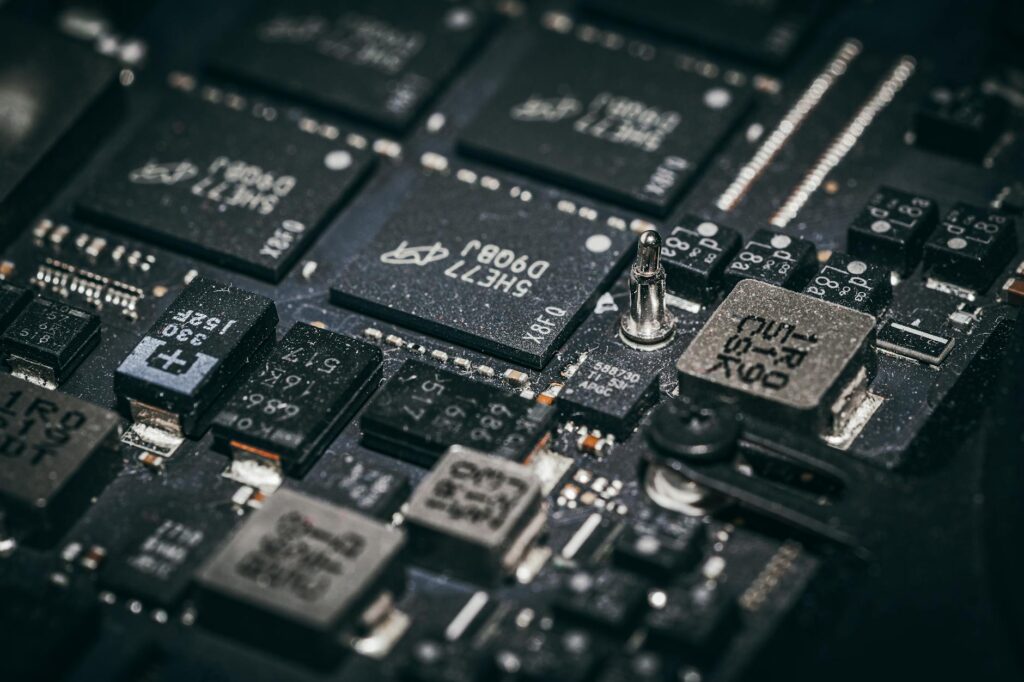
The Shift from Intel to Apple Silicon
For years, Macs relied on Intel processors. This partnership, while fruitful, had limitations. Apple’s decision to transition to its own custom silicon, starting with the M1 chip in late 2020, marked a significant turning point. This move allowed Apple to optimize hardware and software for a smooth, high-performance experience. The M-series chips are built on ARM architecture, the same efficient design found in iPhones and iPads, but scaled up for professional workloads.
This transition wasn’t just about replacing a supplier; it was about rethinking chip design from the ground up. By controlling the entire stack – from the silicon to the operating system – Apple could achieve levels of integration previously unattainable. This unified approach is the secret sauce behind the M-series’ success.
Understanding the System on a Chip (SoC)
At the heart of the revolution is the System on a Chip (SoC) design. Unlike traditional CPUs that require separate chips for graphics, memory, and other functions, Apple’s M-series chips consolidate these into a single unit. This tight integration offers several advantages. Fewer connections mean less data travel time, leading to faster processing. It also dramatically reduces power consumption, a critical factor for mobile devices and laptops.
Think of it like building a city versus building separate specialized districts. In the city (SoC), everything is connected by efficient transit routes (on-chip interconnects), making it faster to get around. In separate districts, you need highways and bridges to connect them, which adds latency and uses more resources.
Key Components of M-Series Chips
Apple’s M-series chips are complex marvels of engineering, each component designed to work in harmony. The primary elements include the Central Processing Unit (CPU), Graphics Processing Unit (GPU), Neural Engine, and the groundbreaking Unified Memory Architecture.
The CPU: Brains of the Operation
The CPU handles the general-purpose computing tasks. Apple’s M-series CPUs feature a performance-core and efficiency-core design. The performance cores tackle demanding tasks like video editing or compiling code, while the efficiency cores handle background processes and less intensive work, conserving battery life. This hybrid approach ensures maximum power when needed and optimal efficiency when not.
For instance, when you’re exporting a high-resolution video, the performance cores go into overdrive. But when you’re just browsing the web or checking email, the efficiency cores keep things running smoothly without draining your battery.
The GPU: Graphics Powerhouse
The GPU is responsible for rendering graphics, powering everything from demanding games to complex visual effects in professional applications. Apple’s integrated GPUs have consistently impressed, offering performance that rivals, and often surpasses, discrete graphics cards from competitors, all while consuming less power. As of 2026, the M4 Pro and M4 Max chips boast significantly enhanced GPU cores, providing desktop-class graphics capabilities.
This means that an M-series powered MacBook Pro or iPad Pro can handle 3D rendering, complex photo editing, and even high-fidelity gaming without breaking a sweat, tasks that previously required dedicated desktop machines.
The Neural Engine: AI Acceleration
The Neural Engine is a dedicated processor for machine learning and artificial intelligence tasks. It accelerates AI-driven features like voice recognition (Siri), image analysis, and advanced computational photography. The Neural Engine has seen exponential improvements with each M-series generation, making AI tasks faster and more efficient than ever before. According to Apple’s own benchmarks, the Neural Engine in the M4 series is capable of billions of operations per second.
This is what powers features like Live Text in photos, automatic background removal in video calls, and intelligent content suggestions within apps.
Unified Memory Architecture: A Game Changer
Perhaps one of the most revolutionary aspects of Apple Silicon is its Unified Memory Architecture (UMA). Instead of having separate pools of memory for the CPU and GPU, UMA provides a single, high-bandwidth, low-latency memory pool accessible by all components on the SoC. This means the CPU and GPU can access the same data simultaneously without needing to copy it, dramatically speeding up workflows.
This is a critical difference. Imagine multiple chefs (CPU, GPU, etc.) all needing to access the same ingredients. With traditional memory, each chef has their own pantry, and they have to move ingredients back and forth. With unified memory, they all share one large, well-organized pantry, making collaboration incredibly fast and efficient.
M-Series Chips in the Mac Lineup
The M-series chips have transformed the Mac. The MacBook Air, once considered an ultraportable with compromises, now offers performance that rivals older MacBook Pros. MacBook Pros, especially those with M-series Pro, Max, and Ultra variants, provide immense power for creative professionals, developers, and researchers. Even the Mac Mini and iMac have seen remarkable performance boosts, offering desktop-class computing in compact form factors.
For example, a MacBook Pro with an M4 Max chip can edit 8K video footage in Final Cut Pro with remarkable fluidity, a task that would have struggled on many Intel-based Macs just a few years ago.
M-Series Revolution in the iPad Ecosystem
The impact of M-series chips on the iPad has been profound, blurring the lines between tablets and laptops. iPads equipped with M-series chips, particularly the iPad Pro models, now possess processing power that exceeds many traditional laptops. Apple’s M-Series Chips Explained: Powering the Mac and iPad Revolution allows for more demanding applications, professional-grade video editing, complex 3D modeling, and console-quality gaming directly on the iPad. The introduction of more advanced multitasking features in iPadOS further capitalizes on this power.
Consider the iPad Pro: it can now run applications like Suffusion for professional video editing or Procreate for detailed digital art, often with workflows comparable to desktop software. This capability was unthinkable before the M-series integration.
Performance Per Watt: The Efficiency Advantage
One of the most celebrated aspects of Apple’s M-series chips is their exceptional performance per watt. This means they deliver incredible computing power while consuming significantly less energy than their predecessors and many competitors. This efficiency is key to the extended battery life seen in MacBooks and iPads, as well as enabling fanless designs in some Mac models like the M1 MacBook Air.
According to benchmarks published by AnandTech in early 2026, M-series chips offer a roughly 50% improvement in performance per watt compared to their closest competitors in certain professional application benchmarks. This efficiency translates directly into a cooler, quieter device with longer unplugged usage.
M-Series Chip Evolution: M1 to M4 and Beyond
Apple hasn’t stood still since the M1’s debut. Each generation has brought improvements: the M2 offered faster CPU and GPU performance and increased memory bandwidth. The M3 introduced architectural enhancements like dynamic caching and hardware-accelerated ray tracing for even better graphics. As of May 2026, the M4 series (M4, M4 Pro, M4 Max, M4 Ultra) is pushing boundaries further, with notable leaps in Neural Engine capabilities and overall efficiency.
The progression from M1 to M4 showcases Apple’s commitment to continuous innovation. For instance, the M4’s advanced AI capabilities are designed to power upcoming on-device generative AI features, setting a new standard for intelligent personal computing.
Practical Tips for Maximizing M-Series Performance
To get the most out of your M-series powered Mac or iPad, consider these tips:
- Keep Software Updated: Apple continuously optimizes macOS and iPadOS for its M-series chips. Ensure your operating system and apps are always current.
- Use Optimized Apps: While M-series chips run older Intel (x86) apps via Rosetta 2 emulation, native Apple Silicon apps perform best. Look for apps labeled “for Apple Silicon” or “Universal”.
- Use Unified Memory: When multitasking or working with large files, understand that unified memory helps. Close unnecessary applications to free up memory for the tasks you’re actively working on.
- Explore Native Apps: For creative professionals, applications like Final Cut Pro, Logic Pro, and Pixelmator Pro are highly optimized for M-series performance.
- Consider iPadOS Power: For iPad users, explore apps that take advantage of the M-series power, such as Suffusion for video editing or Procreate for digital art.
Potential Drawbacks and Considerations
While M-series chips are incredibly powerful, there are a few things to keep in mind. The primary drawback for some users might be the lack of user-degradability. Unlike older Macs with socketed CPUs and RAM, M-series chips have their components soldered directly onto the SoC. This means you must choose your configuration carefully at the time of purchase, as memory and core counts can’t be upgraded later.
Additionally, while performance is stellar, software compatibility can occasionally be an issue for highly specialized or legacy applications not yet optimized for Apple Silicon, though Rosetta 2 handles most cases effectively. For power users needing maximum core counts or specific port configurations, the highest-end M-series variants (like M4 Ultra) can also come with a significant price premium.
Frequently Asked Questions
What is an M-series chip?
Apple’s M-series chips are custom-designed Systems on a Chip (SoCs) built on ARM architecture. They integrate the CPU, GPU, Neural Engine, and memory onto a single piece of silicon for high performance and efficiency.
Are M-series chips better than Intel processors?
For most every day and professional tasks, M-series chips offer superior performance per watt, meaning better speed and battery life compared to most Intel processors found in older Macs.
Can an iPad with an M-series chip replace a MacBook?
For many users, yes. iPads with M-series chips can run demanding apps and offer strong multitasking, serving as a capable laptop alternative, especially when paired with a keyboard and mouse.
What is Unified Memory?
Unified Memory Architecture (UMA) is a single pool of high-bandwidth, low-latency memory that all components on the M-series chip can access. This speeds up data processing significantly.
How does the Neural Engine work?
The Neural Engine is a specialized processor dedicated to accelerating machine learning and AI tasks, enabling features like advanced image analysis and voice recognition.
When will M5 chips be released?
While Apple hasn’t officially announced M5 chips, based on their typical release cycles, new generations are often unveiled in the fall or spring. We might see M5 chips debut in late 2026 or early 2027.
Apple’s M-series chips have undeniably powered a revolution in personal computing, delivering unprecedented performance and efficiency to both Mac and iPad users. By embracing custom silicon and a unified architecture, Apple has set a new benchmark for what portable and desktop devices can achieve.
Actionable Takeaway: If you’re considering a new Mac or iPad in 2026, prioritize models with the latest M-series chips to ensure you benefit from the best available performance, efficiency, and future-proofing.
Last reviewed: May 2026. Information current as of publication; pricing and product details may change.
Editorial Note: This article was researched and written by the Bloxtra editorial team. We fact-check our content and update it regularly. For questions or corrections, contact us.