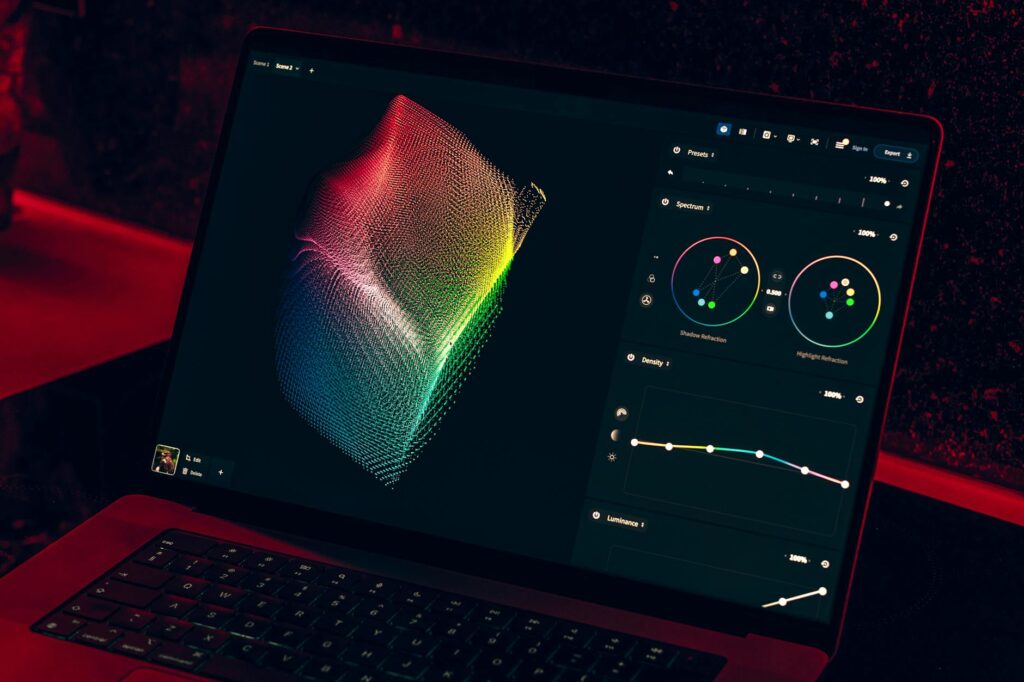
What is Open Dream AI?
This guide covers everything about opendream ai. As of May 2026, Open Dream AI stands out as a sophisticated platform for AI-driven art generation, offering users powerful tools to translate textual ideas into visual creations. It taps into advanced generative AI models to produce unique imagery, making it a significant player in the rapidly evolving digital art space.
Last updated: May 3, 2026
- Open Dream AI leverages latest generative models for text-to-image synthesis.
- It offers a flexible environment for both novice and experienced AI artists in 2026.
- Understanding prompt engineering is crucial for maximizing Open Dream AI’s potential.
- Common pitfalls include unrealistic expectations and improper prompt phrasing.
Many aspiring digital artists and content creators are exploring Open Dream AI to bring their visions to life without needing extensive traditional art skills. The platform aims to democratize creative expression, allowing anyone with an idea to generate compelling visuals. This guide explores its functionalities, benefits, and how to best use its capabilities.
The Power of Generative AI Art in 2026
Generative AI, particularly In visual art, has seen explosive growth. Tools like Open Dream AI are at the forefront, utilizing complex neural networks trained on vast datasets of images and text. These models learn to understand the relationships between words and visual concepts, enabling them to generate novel images from descriptive prompts.
The year 2026 marks a maturation point for these technologies. Beyond simple image creation, AI art generators are now capable of producing highly detailed, stylistically diverse, and contextually relevant artwork. This advancement opens doors for new artistic movements and workflows.
Use Case Example: A freelance graphic designer uses Open Dream AI to quickly generate concept art for a client’s new product line. Instead of spending hours sketching, they input detailed descriptions of the desired aesthetic, materials, and mood, receiving multiple high-quality visual options within minutes. This dramatically speeds up the initial ideation phase.
How Open Dream AI Works: Under the Hood
At its core, Open Dream AI employs sophisticated deep learning models, often based on diffusion or generative adversarial networks (GANs). When a user provides a text prompt, the AI interprets the semantic meaning of the words and phrases. It then navigates its learned visual space to construct an image that best matches the description.
This process involves several stages, from initial noise generation to iterative refinement, guided by the AI’s understanding of artistic styles, objects, and concepts. The platform often provides parameters that users can adjust, such as aspect ratios, style weights, and seed values, to further control the output.
Explanation: Imagine you ask Open Dream AI to create ‘a serene forest clearing with sunlight streaming through ancient trees’. The AI first identifies key elements: ‘forest clearing’, ‘sunlight’, ‘ancient trees’, and the mood ‘serene’. It then accesses its knowledge base of what these elements look like and how they interact, gradually rendering an image pixel by pixel.
Key Features and Capabilities of Open Dream AI
Open Dream AI distinguishes itself through a suite of features designed to empower users. These often include advanced prompt interpretation, multiple style presets, image-to-image generation, and upscaling capabilities. The interface typically allows for fine-tuning parameters that influence the final artwork.
Users can often upload existing images to guide the generation process, allowing for style transfer or concept modification. The ability to upscale lower-resolution outputs to higher resolutions without significant loss of detail is also a critical feature for professional use.
A photographer uses Open Dream AI’s image-to-image feature. They upload a photograph of a city skyline and prompt the AI to render it in the style of Van Gogh’s ‘Starry Night’. The AI then applies the characteristic brushstrokes, color palette, and emotional intensity of Van Gogh to the uploaded image.
Mastering Prompt Engineering for Open Dream AI
Prompt engineering is the art and science of crafting effective text prompts for AI models. For Open Dream AI, this means understanding how to describe not just the subject matter, but also the desired artistic style, mood, lighting, composition, and even camera angles.
A well-crafted prompt is often detailed, specific, and uses strong descriptive keywords. It might include negative prompts to exclude unwanted elements. Learning what keywords trigger certain artistic styles or emotional responses is key to unlocking the AI’s full creative potential.
Explanation: Instead of ‘a dog’, try ‘a fluffy golden retriever puppy playing in a field of wildflowers, golden hour lighting, photorealistic, shallow depth of field, by Annie Leibovitz’. The latter prompt provides far more context, leading to a much more specific and visually rich outcome.
Common Mistakes to Avoid with Open Dream AI
Despite its power, users often encounter limitations or frustrations with AI art generators. A primary mistake is underestimating the complexity of prompt engineering. Vague or overly simple prompts lead to generic or irrelevant outputs.
Another common pitfall is expecting perfect results on the first try. AI art generation is an iterative process. Users might also overlook the importance of negative prompts, which help steer the AI away from undesirable elements like distorted anatomy or unwanted objects.
Mistake: A user prompts for ‘a futuristic city’ and receives a generic sci-fi cityscape. They didn’t specify the architectural style, the atmosphere, or the time of day, leading to a bland result.
Solution: Refine the prompt to ‘a bustling cyberpunk city at night, neon lights reflecting on wet streets, towering holographic advertisements, flying vehicles, gritty atmosphere, detailed’. Adding specific details and mood descriptors significantly improves the output.
Advanced Techniques and Workflow Integration
For professionals, Open Dream AI can be integrated into broader creative workflows. This involves using the AI-generated images as a base for further editing in traditional software like Adobe Photoshop or GIMP. Techniques such as in painting (editing specific areas of an image) and outpainting (extending an image’s canvas) are also powerful tools.
Combining multiple AI generations, layering them, or using them as textures can lead to highly complex and original artworks. The ability to generate variations of a successful image also aids in exploring different creative directions rapidly.
Example Workflow: An indie game developer uses Open Dream AI to create background assets. They generate a base environment, then use in painting to add specific interactive elements or characters, and finally refine details and lighting in a 3D modeling or 2D art program. According to a report by Game Developer (2025), AI tools are increasingly becoming standard in asset creation pipelines.
Open Dream AI vs. Other AI Art Tools
The AI art landscape is competitive, with tools like Midjourney, Stable Diffusion, and DALL-E 3 offering different strengths. Open Dream AI might offer a unique balance of features, accessibility, or specific model architectures. Some platforms excel at photorealism, while others are better for abstract or stylized art.
Factors to consider include the user interface’s intuitiveness, the quality and diversity of generated images, pricing models, and the community support available. As of 2026, many open-source models are also gaining traction, offering greater control but often requiring more technical expertise.
Comparison Point: While Midjourney is renowned for its artistic flair and ease of use through Discord, Open Dream AI might offer more granular control over model parameters or a more strong API for developers. DALL-E 3, integrated into ChatGPT Plus, excels at prompt adherence and creative interpretation.
Ethical Considerations and Copyright in AI Art
The rise of AI art generators like Open Dream AI brings significant ethical questions to the forefront. Concerns include the potential for job displacement for human artists, the copyright status of AI-generated works, and the use of copyrighted material in training datasets.
As of May 2026, legal frameworks are still evolving. While some jurisdictions grant copyright to human creators who use AI as a tool, the copyrightability of purely AI-generated images remains a complex and often contested issue. According to the U.S. Copyright Office (2024), works created solely by AI without human authorship may not be eligible for copyright protection.
Explanation: If you use Open Dream AI to create an image, who owns the copyright? Is it you, the AI developer, or is the work in the public domain? The answer often depends on the platform’s terms of service and evolving legal interpretations.
The Future of Open Dream AI and AI Art
The trajectory of AI art generation suggests continued rapid advancement. We can anticipate Open Dream AI and similar platforms becoming even more intuitive, capable of generating higher resolutions, more consistent outputs, and potentially even animated visuals or 3D assets.
The integration of AI into mainstream creative software will likely deepen, blurring the lines between human and machine creativity. And, advancements in AI understanding of context, emotion, and narrative will lead to more nuanced and sophisticated artistic outputs.
Trend Observation: The focus is shifting from merely generating images to creating entire visual narratives and interactive experiences. Platforms are increasingly being developed with collaborative workflows in mind.
Tips for Getting Started with Open Dream AI
For newcomers, the best approach is to start simple. Begin with straightforward prompts and gradually add complexity. Don’t be afraid to experiment with different keywords and styles to see what happens.
Use the platform’s tutorials or community forums if available. Many users share their prompts and techniques, offering valuable learning resources. Focus on understanding the core concepts of text-to-image generation before diving into highly technical parameters.
Tip: Start by trying to replicate an existing image style. Prompt for ‘a cat in the style of Picasso’ or ‘a landscape in the style of Monet’. This helps you learn how specific stylistic descriptors influence the output.
Frequently Asked Questions
Is Open Dream AI free to use?
Open Dream AI often operates on a freemium model. While basic usage might be free, advanced features, higher generation speeds, or commercial use licenses typically require a subscription or credits. Check their official website for the latest pricing details as of 2026.
What kind of images can Open Dream AI create?
Open Dream AI can generate a vast array of images, from photorealistic scenes and portraits to abstract art, illustrations, concept art, and stylized graphics. The output quality and style depend heavily on the prompt and the specific AI models employed by the platform.
Do I need artistic skills to use Open Dream AI?
No, you don’t need traditional artistic skills. Open Dream AI is designed to translate textual descriptions into visuals. However, an understanding of aesthetics, composition, and effective communication through language (prompt engineering) greatly enhances the results.
Can I use images generated by Open Dream AI commercially?
Commercial usage rights vary significantly based on the platform’s terms of service and your subscription level. Some tiers may allow commercial use, while others restrict it to personal projects. Always verify the licensing agreement before commercial deployment.
How does Open Dream AI compare to Midjourney?
Both Open Dream AI and Midjourney are powerful text-to-image tools. Midjourney is often praised for its artistic output and ease of use via Discord. Open Dream AI may offer more control over underlying models or specific features, catering to users who need deeper customization or integration.
What are the limitations of AI art generators like OpenDream AI?
Limitations include potential for anatomical inaccuracies (especially hands and faces), difficulty with complex or nonsensical prompts, and ethical concerns regarding training data and copyright. Achieving hyper-specific details can also be challenging without advanced prompt refinement.
Conclusion
OpenDream AI represents a significant advancement in AI-driven creativity as of May 2026, offering a powerful yet accessible platform for generating diverse and compelling visual art. By understanding its mechanisms, mastering prompt engineering, and being mindful of common pitfalls and ethical considerations, users can unlock its full potential.
Start by experimenting with simple prompts and gradually increasing complexity. The journey into AI art generation is one of continuous learning and discovery.
Editorial Note: This article was researched and written by the Bloxtra editorial team. We fact-check our content and update it regularly. For questions or corrections, contact us.